Send Weekly AUD trading update
Send Payments Currency Market Update - International Currency Market Conditions and What to look out for this Week 🗓️
AUD Performance
- The Australian Dollar (AUD) became the worst-performing G10 currency on a 1-day view in broad risk-off market sentiment, according to Rabobank’s FX analyst Jane Foley.
- Despite the risk that the RBA could hike interest rates at its August 6 policy meeting, the AUD’s poor performance reflected potential headwinds from continued weakness in the Chinese economy.
- Earlier this month, AUD/USD rallied as the USD weakened in response to heightened expectations of a September Fed rate cut, though most of these gains have since been wiped out.
- Recently, the AUD has been weighed down by fears stemming from Chinese growth concerns and a cut in the Chinese interest rate.
- Rabobank continued to target AUD/NZD at 1.12 in the coming weeks.
Impact of PBoC's Actions
- The Australian Dollar extended losses after the PBoC unexpectedly cut the one-year medium-term lending facility (MLF) rate by 20 basis points.
- The MLF cut, the biggest since April 2020, followed Monday's cuts in several benchmark rates.
- China’s off-cycle monetary policy easing could counter-intuitively hurt investor sentiment.
- Ewen Chew, a Reuters market analyst, stated the move aimed to bolster the Chinese economy, which should be supportive of the Aussie Dollar. However, surprise moves could raise more questions than they answered.
AUD/USD
- The US PCE inflation increased by 2.5% YoY in June, underscoring an improving inflation environment.
- The RBA’s hawkish stance might support the Aussie as inflation is running too high.
- Rising bets that the US Federal Reserve (Fed) would begin cutting interest rates in September weigh on the US dollar (USD).
- Market participants will monitor the Australian Retail Sales on Tuesday.
- On Wednesday, the Australian Consumer Price Index (CPI) and Fed Interest Rate Decision will be in the spotlight.
AUD/JPY
- The short-term bearish trend continued, despite the minor gains, as the pair has lost more than 7% since June.
- The overall control of sellers remained, as the pair closed on a 4.30% losing week, solidifying the bearish outlook.
- The daily Relative Strength Index (RSI) increased from its previous levels, reaching 23, hinting at a possible easing in the bearish momentum which may support the AUD in the short-term
Last week 🗞️ Key Takeaways:
AUD/USD
- US President Joe Biden's exit from the presidential race had increased the odds for former President Donald Trump and boosted investors' appetite for riskier assets.
- Experts argued that Biden’s decision would increase market volatility, though the market reaction had been limited so far.
- Peter Earle, senior economist at the American Institute for Economic Research, stated that investors might seek a safe haven until they could assess Biden’s replacement's policies.
- Dovish Fed expectations had prompted fresh US Dollar selling.
- Pairs where AUD was the weaker currency, such as EURAUD and GBPAUD, were now in focus.
AUD/NZD
- AUDNZD remained in a tight trading range between 1.1055-1.1155, looking for direction.
- The weakening of the AUD hadn’t impacted the AUDNZD rate in the same way as other major currencies.
AUD/GBP
- The pair had been trending downwards since the 10th of July, dropping over 2%.
- Price action on the AUDGBP 1-hour chart had touched the lower trend line in this bull run.
AUD/EUR
- The European interest rate decision on Thursday evening was held at 4.25% as expected, though the AUD continued to lose ground.
- The AUDEUR rate had also dropped nearly 2% in the last two weeks, showing AUD was weakening against most of the major currencies.
AUD/JPY
- The AUDJPY rate had dropped from the yearly highs towards the 105.00 mark. This had been a support/resistance point over the last few years, needing major news to push back below this level.
- The Moving Average Convergence Divergence (MACD) showed flat red bars, indicating a pause in the previous intensified selling activity.
Things to look out for this week;
Tuesday 30th July
🇩🇪 German Prelim CPI m/m - EUR
Wednesday 24th July
🇺🇸 CB Consumer Confidence - USD
🇺🇸 JOLTS Job Openings - USD
🇦🇺 CPI q/q - AUD
🇦🇺 CPI y/y - AUD
🇦🇺 Trimmed Mean CPI q/q - AUD
🇨🇳 Manufacturing PMI - CNY
🇯🇵 BOJ Policy Rate - JPY
🇯🇵 Monetary Policy Statement - JPY
🇯🇵 BOJ Outlook Report - JPY
🇯🇵 BOJ Press Conference - JPY
🇪🇺 Core CPI Flash Estimate y/y - EUR
🇪🇺 CPI Flash Estimate y/y - EUR
🇺🇸 ADP Non-Farm Employment Change - USD
🇨🇦 GDP m/m - CAD
🇺🇸 Employment Cost Index q/q - USD
Thursday 1st August
🇺🇸 Pending Home Sales m/m - USD
🇺🇸 Federal Funds Rate - USD
🇺🇸 FOMC Statement - USD
🇺🇸 FOMC Press Conference - USD
🇬🇧 BOE Monetary Policy Report - GBP
🇬🇧 Monetary Policy Summary - GBP
🇬🇧 MPC Official Bank Rate Votes - GBP
🇬🇧 Official Bank Rate - GBP
🇬🇧 BOE Gov Bailey Speaks - GBP
🇺🇸 Unemployment Claims - USD
Friday 2nd August
🇺🇸 ISM Manufacturing PMI - USD
🇨🇭 CPI m/m - CHF
🇺🇸 Average Hourly Earnings m/m - USD
🇺🇸 Non-Farm Employment Change - USD
🇺🇸 Unemployment Rate - USD
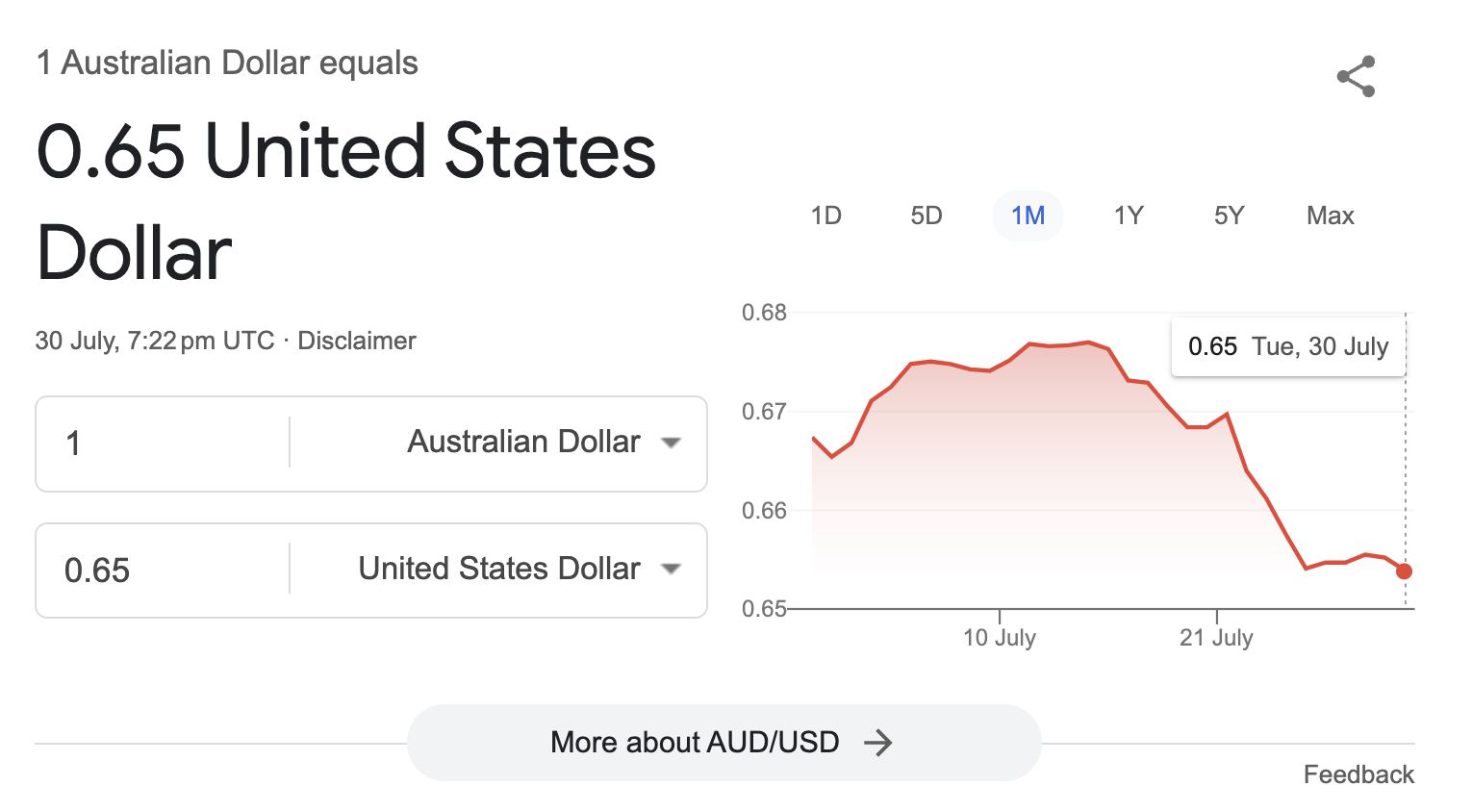
AUD-USD 🇺🇸
Rates continue to drop, declining since mid-month sitting at 0.6553.

AUD-GBP 🇬🇧
Sitting 0.5092 the AUD - GBP has continued it’s decrease since 10 July.
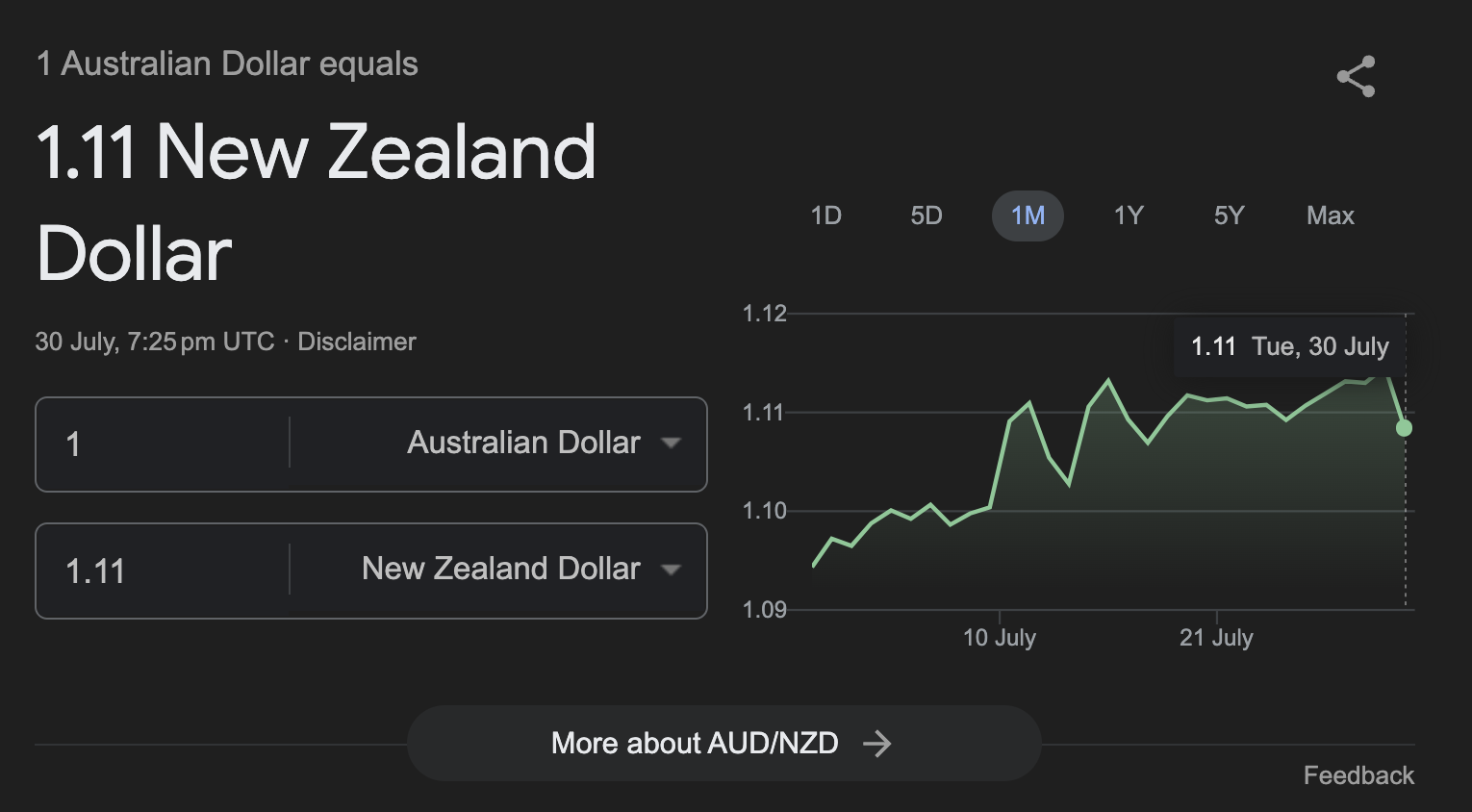
AUD-NZD 🇳🇿
Rates have kept within a band of 1.1128.
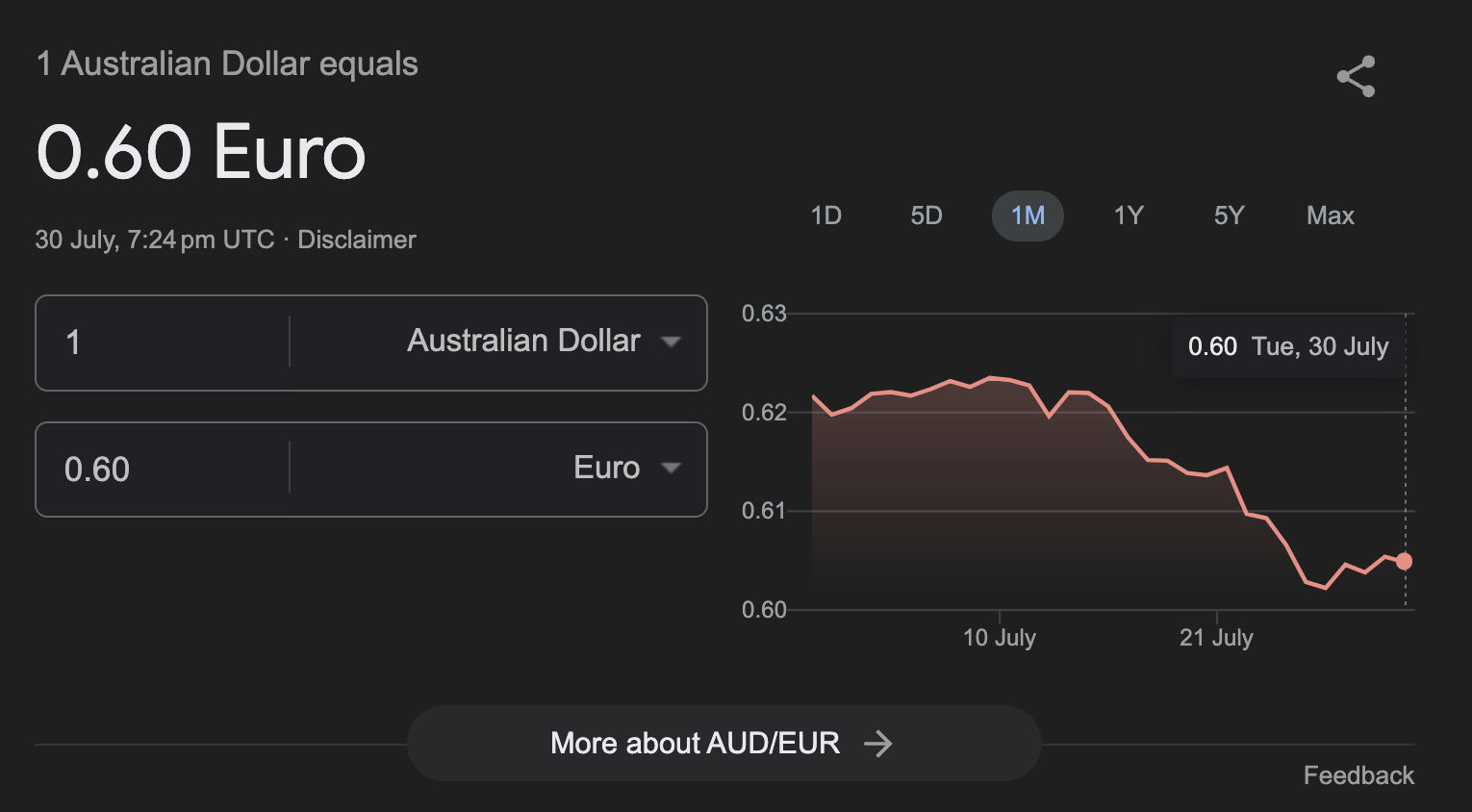
AUD-EUR 🇪🇺
AUD to the EUR has continued a decline since mid-month at 0.6037.
If you’d like to make a transfer, reach out to Send Payments.
The Expatriate always tries to make sure all information is accurate. However, when reading our website, please always consider our Disclaimer policy.